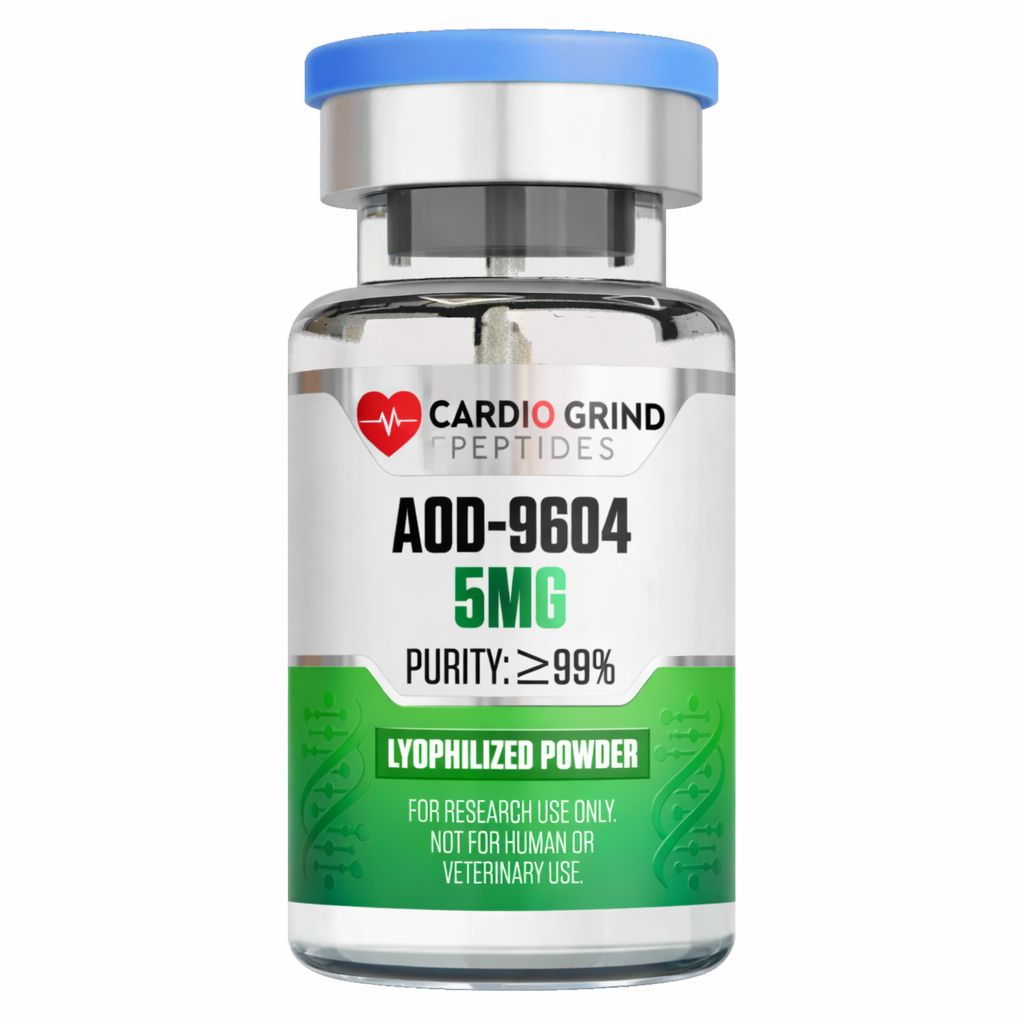
Aod-9604
$175.00
In stock
Have questions?
Product Details
AOD‑9604 is a modified fragment of human growth hormone designed to isolate “fat signaling” without “growth signaling.” In the literature, it’s often described as the C‑terminal fragment of hGH (amino acids 177–191) with an additional tyrosine at the N‑terminus—hence “hexadecapeptide” (16 amino acids). 2
What AOD‑9604 is
AOD‑9604 is a research peptide derived from the fat-regulating region of growth hormone. It was developed in the context of obesity drug research as an attempt to capture GH’s lipolytic (“fat breakdown”) activity while avoiding GH’s unwanted endocrine effects (like raising IGF‑1 or worsening glucose tolerance in some contexts). 3
AOD‑9604 was developed by Metabolic Pharmaceuticals Limited4 and later discussed in peer-reviewed anti-obesity pharmacotherapy reviews as a discontinued candidate after larger trials failed to show meaningful weight-loss efficacy. 5
What AOD‑9604 is not
AOD‑9604 is not a GLP‑1 drug, and it’s not primarily an appetite suppressant. GLP‑1 receptor agonists reduce weight largely by changing appetite/food intake and slowing gastric emptying; AOD‑9604’s development rationale focused on fat tissue metabolism instead. 6
AOD‑9604 is also not “growth hormone.” Multiple lines of evidence suggest it does not meaningfully activate the classic growth hormone receptor (GHR) pathway the way intact hGH does. For example, the peptide lacks key receptor-binding features needed for receptor activation and shows no clinically relevant change in IGF‑1 in the human safety trials summarized in the literature. 7
Save this product for later
Aod-9604
Display prices in:USD